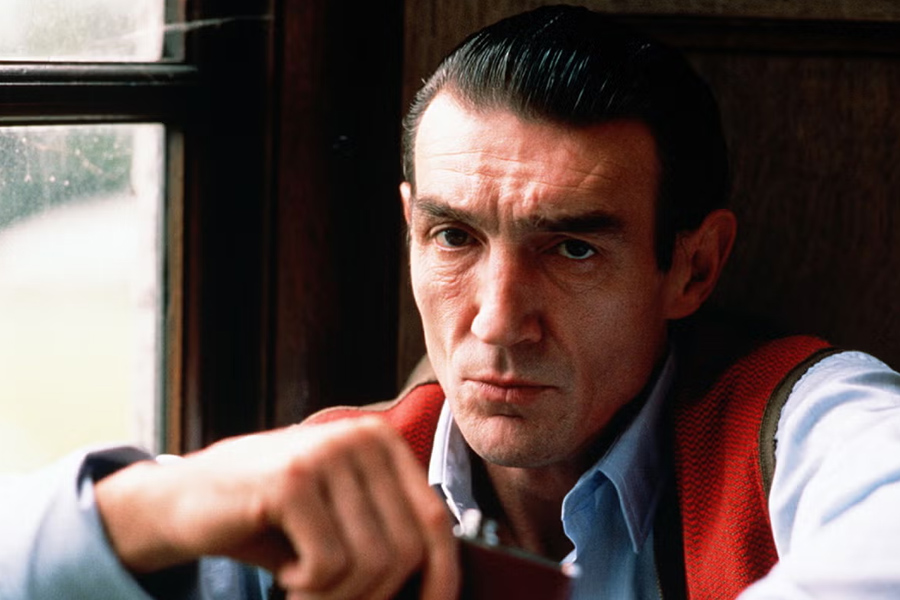
Basic Information
| Field | Details |
|---|---|
| Full name | Derrick O Connor |
| Common spelling in public record | Derrick O’Connor |
| Birth year | 1941 |
| Birthplace | Dublin, Ireland |
| Profession | Actor, writer, director, producer |
| Best known for | Lethal Weapon 2, Brazil, Time Bandits, Jabberwocky |
| Spouse | Mimi Suzanne Ploss |
| Child | Max O’Connor |
| Death date | 29 June 2018 |
| Death place | Santa Barbara, California |
A Life Built on Stagecraft and Presence
As an actor who didn’t seek fame, Derrick O’Connor stands out. He drew it in like a torch in a dark room. He became an international actor after being born in Dublin in 1941. Theatre, television, and film were his steady, practical path. Career didn’t depend on glamour. It required time, instinct, and presence.
His East 15 Acting School training mattered. It provided him character-work discipline. He was noted for British theater performances and later in rude, sneaky, or subtly hazardous films. He joined a theatrical scene that prized creativity and enthusiasm in the 1970s. He learned to switch between live stage intensity and screen subtlety without losing control throughout that time.
He bridged theatre and modern character acting throughout his career. Not confined to one lane. He wrote. Directed. Produced. He played tiny TV roles and large films. That range gave his life a complex rhythm that many actors strive for but few attain.
Family, Marriage, and Personal Connections
Derrick O Connor’s family life was private in the way many working actors prefer. Still, a few names appear clearly in the public record, and they help complete the picture of the man behind the roles.
Mimi Suzanne Ploss
Mimi Suzanne Ploss was his wife. The marriage began in 1990 and lasted until his death in 2018. That span suggests a long shared life, not a passing headline. I picture that kind of partnership as the quiet architecture behind a public career. While his screen roles moved in front of cameras and across audiences, his marriage remained the fixed point in the background.
Mimi is also the name most closely tied to his later years. Public references to his death mention that she survived him, which places her at the center of his immediate family story. Her role is not defined by publicity, but by continuity. She is part of the human frame around his professional life.
Max O’Connor
Max O’Connor is Derrick O Connor’s son. The public record identifies him as a child of the actor, and some listings describe him as a filmmaker or crew professional. That detail suggests a family connection to moving images did not end with Derrick’s generation. It continued in another form.
A son in the film world often inherits not fame but atmosphere. Long hours. Set culture. The language of performance and production. Max appears to carry some of that legacy forward. Even without a flood of private detail, the family line is clear. Derrick was not only a screen figure. He was also a father.
Lawrence O’Connor
There is also a more personal, less official glimpse from a family recollection that places Derrick in the role of stepfather within a household that included Lawrence O’Connor and Annie Balfour. This matters because it adds texture. It shows that Derrick’s family identity was not limited to one simple label. He appears in memory as part of a blended home, a domestic life that may have been as complicated as any stage script.
I treat that kind of detail carefully, but it still helps me see the man more fully. Family is often invisible in public careers. Here, the small fragments matter. They suggest that Derrick O Connor lived with real responsibilities beyond performance, and that his personal life had its own cast of characters.
Career Highlights That Defined Him
Derrick O Connor’s career moved with impressive variety. He worked in theatre early, including connections to the Traverse Theatre, Royal Lyceum Theatre, Royal Court, and the Royal Shakespeare Company. That is a serious list. It places him in the heart of British and Irish stage culture.
He also made his mark in film and television. One of his early screen appearances was in The Blood on Satan’s Claw, a title that sounds like it came from a fever dream. He also appeared in Crown Court and Z Cars. Those roles were part of a broad acting foundation, the kind built one credit at a time.
His film career later opened into larger productions. He appeared in Jabberwocky, Time Bandits, and Brazil, all of which are tied to Terry Gilliam’s distinctive visual world. That alone tells me something important. Derrick O Connor could hold his own in surreal, stylized cinema. He was believable in worlds that bent the rules of reality.
Then came Lethal Weapon 2, perhaps his most widely recognized screen role. As Pieter Vorstedt, he brought menace and force to a major Hollywood action film. That role widened his audience. He was no longer just a respected stage and supporting screen actor. He became memorable to mainstream filmgoers.
He continued working in later years with roles in Hope and Glory, Deep Rising, End of Days, Daredevil, Alias, Monk, and Pirates of the Caribbean: Dead Man’s Chest. He also wrote, directed, and starred in A Pint of Plain in 1975. That is an achievement worth pausing on. Not every actor can step behind the camera and shape a project from the inside.
Work Achievements and Public Reputation
My professional opinion of Derrick O’Connor is strong and intelligent. Character depth trumped celebrity sparkle. His expression could convey a story before he talked. He succeeded by steadiness, not noise.
Some actors have famous lines. Derrick’s legacy is hard to define. And he carried atmosphere. He could convey history, tension, and wit. That skill is rare. It typically differentiates decent actors from memorable ones.
He joined an important movement with his 1970s theater work. Fringe and repertory theatre transformed British and Irish performance. That current included Derrick. He shaped it within.
A Timeline of Derrick O Connor’s Life
- 1941: Born in Dublin.
- 1960s: Began acting professionally and entered British stage and screen work.
- 1970s: Built a strong theatre reputation and appeared in early film and television work.
- 1975: Wrote, directed, and starred in A Pint of Plain.
- Late 1970s and 1980s: Appeared in Jabberwocky, Time Bandits, and Brazil.
- 1989: Reached a wider audience with Lethal Weapon 2.
- 1990: Married Mimi Suzanne Ploss.
- 1990s and 2000s: Continued acting in film and television, including action, fantasy, and drama roles.
- 2014 to 2016: Continued to appear in later screen work.
- 29 June 2018: Died in Santa Barbara, California, at age 77.
FAQ
Who was Derrick O Connor?
Derrick O Connor was an Irish actor, writer, director, and producer born in Dublin in 1941. I think of him as a classic character actor whose work spanned stage, television, and film, with a career that lasted for decades.
Who was Derrick O Connor’s wife?
His wife was Mimi Suzanne Ploss. Their marriage began in 1990 and remained part of his life until his death in 2018.
Did Derrick O Connor have children?
Yes. His son is Max O’Connor. Public references also suggest a family connection that includes Lawrence O’Connor in a stepfamily setting.
What was Derrick O Connor best known for?
He is best known for Lethal Weapon 2, along with notable work in Brazil, Time Bandits, Jabberwocky, and later films and television projects. His screen style was often intense, grounded, and memorable.
Did Derrick O Connor work outside acting?
Yes. He wrote, directed, and starred in A Pint of Plain. He also worked in theatre production and direction, which shows that his creative life extended well beyond acting alone.
What made Derrick O Connor’s career special?
I would say it was his range. He could move from stage to screen, from Britain to Hollywood, from comedy-adjacent fantasy to hard-edged action. That kind of adaptability is rare, and it gave his career real staying power.