The woman behind the famous name
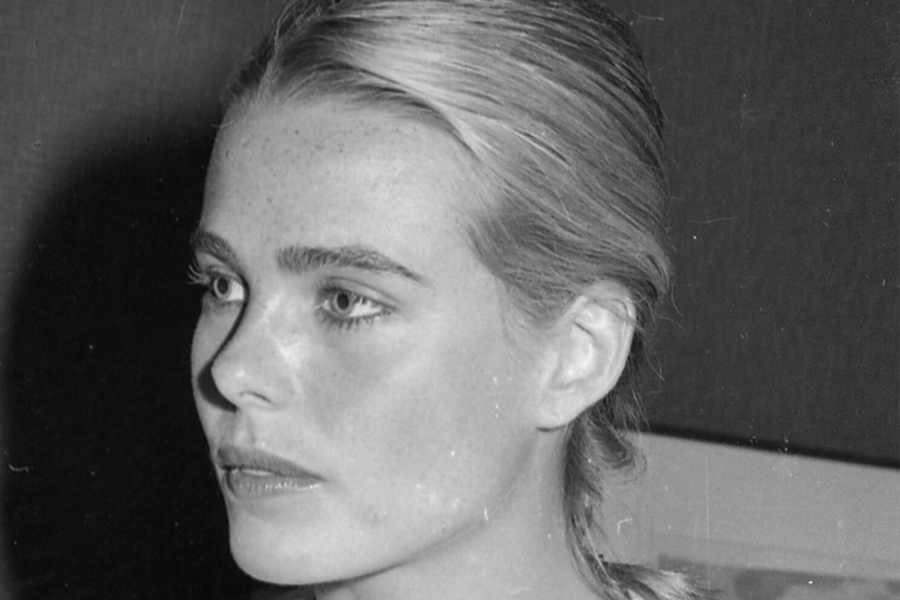
Margot Hemingway, known as Margaux Hemingway, lived a life that sparkled like a magazine cover and crumbled under stresses most people never confront. Margot Louise Hemingway was born in Portland, Oregon, on February 16, 1954, into a mythical family. As Ernest Hemingway’s granddaughter, she inherited a famous surname and a history that might be both a crown and a trap.
Margot was the middle of Jack Hemingway and Byra Louise “Puck” Whittlesey’s three daughters. Joan, known as Muffet, and Mariel, a famous actress, were her sisters. The family resided in Oregon, Cuba, San Francisco, and Idaho, where Margot grew up in Ketchum. The Idaho landscape mattered. Her rough environment, distant from fashion centers, evoked the Hemingway family.
Photographers observed her imposing presence at 6 feet, 1.83 meters. Her name has a tale. She changed Margot to Margaux to give it a French flair for the fashion industry she would soon rule. Her parents named her after Château Margaux wine.
A meteoric rise in the 1970s
Margaux Hemingway became one of the most recognizable faces of the 1970s. Her ascent in modeling was swift and dramatic, like a match thrown into dry grass. At a time when the idea of the “supermodel” was still taking shape, she helped define it.
She signed a $1 million Fabergé Babe perfume deal in 1975. That transaction was momentous. It made waves by showing that models could be more than faces in paper. She might be a brand, commercial force, and cultural event. She featured on major fashion magazine covers and was a staple in upscale nightclubs like Studio 54.
Here is a quick snapshot of key milestones:
| Year | Age | Event |
|---|---|---|
| 1954 | 0 | Born in Portland, Oregon |
| 1975 | 21 | Signs $1 million Fabergé contract |
| 1975 | 21 | Marries Erroll Wetson |
| 1976 | 22 | Film debut in Lipstick |
| 1978 | 24 | Divorces Erroll Wetson |
| 1979 | 25 | Marries Bernard Foucher |
| 1985 | 31 | Divorce from Bernard Foucher |
| 1987 | 33 | Seeks treatment at Betty Ford Center |
| 1988 | 34 | Mother dies of cancer |
| 1996 | 42 | Dies in Santa Monica, California |
Her beauty and pedigree made her irresistible to editors, advertisers, and the public. But fame can be a hall of mirrors. The more people admired her image, the harder it became to protect the person inside it.
Acting, ambition, and career shifts
Margaux went beyond modeling. She moved into movies to develop a more stable and diverse career. Lipstick, a controversial rape-revenge thriller starring her younger sister Mariel Hemingway and Anne Bancroft, was her 1976 acting debut. The film made the sisters famous and linked their names.
Her later acting credits included Killer Fish in 1979, They Call Me Bruce? in 1982, and Over the Brooklyn Bridge in 1984. As the years went on, her acting career drifted toward smaller productions and direct-to-video films, including Inner Sanctum in 1991 and Inner Sanctum II in 1994.
She also did wildlife and animal-related TV and documentaries. Though less well-known, that portion of her life depicts a woman seeking to remake herself and find significance outside the camera flash. That part is telling. Lots of people recall glamour. Few recall her struggle to rebuild.
Jack Hemingway and the shadow of the family legacy
The eldest son of Ernest and Hadley Richardson, Jack Hemingway was Margaux’s father. Writer, fisherman, stockbroker, and conservationist. His writing evoked Hemingway’s adventure. However, the family tale was far more difficult than it appeared.
Jack and his daughters were accused of sexual abuse in the 1990s. These charges cast a lengthy shadow over the family and reinforced the idea that Hemingway’s legacy included hidden suffering and creative genius. The family was estranged when Jack and his second wife disputed the charges.
For Margaux, this was not just family conflict. It was part of the emotional weather she had lived in for years. The Hemingway name brought prestige, but inside the home it could feel more like a locked room.

Byra “Puck” Hemingway and a difficult mother-daughter bond
Margaux’s mother, Byra Louise “Puck” Whittlesey Hemingway, worked for an airline and had a strained relationship with her daughter. Their bond was complicated and often painful, though there was reconciliation before Puck died of cancer in 1988.
That timing counts. Margaux struggled with addiction, depression, and career decline by the late 1980s. Her mother’s death contributed to her anguish. Family stories are rarely neat. In the Hemingway family, love and hurt were like vines.
Joan “Muffet” Hemingway and the elder sister dynamic
Joan, known as Muffet, was the oldest of the three Hemingway sisters. She was an actress and writer, though she remained less publicly visible than Margaux and Mariel. Even so, she was central to the family dynamic.
The traumatic internal history of Joan and Margaux was subsequently revealed. Her role in the tale reminds me of family ecosystems. No one member bears the load alone, and no harm belongs to one. The three sisters shared love, quiet, loyalty, and damage.
Mariel Hemingway and the voice that kept speaking
Mariel Hemingway became the most publicly vocal member of the family in later years. An acclaimed actress known for roles such as Manhattan and for appearing with Margaux in Lipstick, she also became an important witness to the family’s internal struggles.
Mariel has spoken openly about trauma, mental health, and what many call the “Hemingway curse.” She has addressed the family history of depression, addiction, and suicide in interviews, documentaries, and her own writing. She also confirmed aspects of the abuse allegations that surfaced publicly.
Her work turned private pain into public conversation. That matters because Margaux’s story is often reduced to glamour and tragedy. Mariel’s perspective helps restore the missing middle, the years of fear, confusion, and survival between those two poles.
Ernest Hemingway, Hadley Richardson, and inherited sorrow
No account of Margaux Hemingway can ignore her grandfather, Ernest Hemingway. He was one of the most celebrated writers of the 20th century, and his suicide in 1961 became part of the family legend and burden. His first wife, Hadley Richardson, was Margaux’s grandmother through Jack.
Suicides plagued the family for centuries. A “Hemingway curse,” a theatrical expression that describes catastrophic recurrence, emerged from that pattern. When a family has celebrity, mental illness, addiction, and unresolved trauma, each generation might feel like it’s walking through a fault line house.
Margaux did not simply live in Ernest Hemingway’s shadow. She lived in the emotional architecture that shadow helped shape.
Love, marriage, and public identity
Two marriages for Margaux. Erroll Wetson (Wetanson) was her first husband. They married 1975 and divorced 1978. He helped establish her modeling career, and their love was bright and fast-burning when everything seemed to move quickly.
Her second husband was Bernard Foucher, sometimes referred to in some accounts with a noble title. They married around 1979 and divorced in 1985. Neither marriage lasted, and she had no children.
Her relationships often unfolded under public scrutiny. That kind of visibility can distort intimacy. It turns ordinary troubles into headlines and private disappointments into part of a larger narrative the world feels entitled to consume.
Mental health, addiction, and the battle behind the image
Behind the polished photographs, Margaux faced severe personal challenges. She struggled with depression, bulimia, epilepsy, and substance use. These were not passing troubles. They were deep, persistent battles that affected her health, finances, and work.
In 1987, she entered the Betty Ford Center to restore her balance. This should be stressed. Her narrative goes beyond collapse. In addition, effort matters. She persisted. Treatment was sought. She did fresh work. She relocated to Santa Monica for a new start.
Financially, her life also changed dramatically. Though she once commanded enormous fees and signed a landmark million-dollar contract, later years brought bankruptcy and instability. The fall from luxury to precarity can be brutal, especially when the public still expects you to embody glamour.
Her final years and death in 1996
In the 1990s, Margaux continued to work, though often in lower-profile projects. She also spoke more openly about her past and tried to reshape her life. Yet the accumulated weight of trauma, illness, addiction, and family history remained immense.
The corpse was located around July 2 after she died in Santa Monica, California, on July 1, 1996. Her age was 42. She died of phenobarbital overdose and suicide. Some family members had trouble embracing the verdict, which is normal after a loss.
The date carried its own haunting echo. She died near the anniversary of Ernest Hemingway’s death, which had occurred on July 2, 1961. In a family already marked by symbolic repetition, that overlap only deepened the sorrow.
Why Margaux Hemingway still resonates
Margaux Hemingway remains compelling because she embodied several American stories at once. She was the glamorous 1970s supermodel, the celebrity trying to cross into acting, the daughter of a wounded family, and the woman trying to survive a legacy that seemed too heavy to hold.
Her life speaks to the seduction of fame and the silence that can sit beneath it. A camera can capture cheekbones, height, and style. It cannot photograph inherited pain. It cannot show how a family name can glitter like gold and cut like glass.
Margaux Hemingway is revisited today through vintage images, video snippets, family views, and mental health discussions. That fascination goes beyond nostalgia. This is recognition. Beautiful, damaged, and human, her life was varied.
FAQ
Who was Margot Hemingway?
Why is she also called Margaux Hemingway?
She was born Margot Louise Hemingway, but later adopted the spelling “Margaux.” The change gave her name a more French and fashion-oriented style. It also echoed the wine, Château Margaux, that inspired her original name.
What was Margaux Hemingway famous for?
She was famous as a fashion model and actress. In the 1970s, she became one of the first true supermodels and signed a groundbreaking $1 million contract with Fabergé for Babe perfume in 1975.
Was Margaux Hemingway related to Ernest Hemingway?
Yes. She was the granddaughter of Ernest Hemingway through her father, Jack Hemingway, who was Ernest’s eldest son.
What was her family life like?
Who were Margaux Hemingway’s parents?
Her father was Jack Hemingway, and her mother was Byra Louise “Puck” Whittlesey Hemingway. Their relationships with Margaux were often described as strained and complicated.
Did Margaux Hemingway have siblings?
Yes. She had two sisters, Joan “Muffet” Hemingway and Mariel Hemingway. Mariel later became a successful actress and a public voice on the family’s trauma and mental health struggles.
Did Margaux Hemingway have children?
No. She did not have children.
What films did she appear in?
What was Margaux Hemingway’s first movie?
Her first major film was Lipstick in 1976. She starred in it alongside her sister Mariel Hemingway and Anne Bancroft.
What other acting projects did she do?
She appeared in films such as Killer Fish in 1979, They Call Me Bruce? in 1982, Over the Brooklyn Bridge in 1984, Inner Sanctum in 1991, and Inner Sanctum II in 1994.
What struggles did she face?
Did Margaux Hemingway struggle with mental health?
Yes. She experienced depression and bulimia and also dealt with epilepsy. These issues affected both her personal life and career.
Did she have substance abuse problems?
Yes. She struggled with substance use and sought treatment at the Betty Ford Center in 1987 as part of her recovery efforts.
Were there abuse allegations in the Hemingway family?
Yes. In the 1990s, allegations of sexual abuse involving her father, Jack Hemingway, and his daughters became public. These allegations were denied by Jack and his second wife, but they remain a significant part of the family’s history.
How did Margaux Hemingway die?
When did she die?
She died on July 1, 1996, and her body was found around July 2 in Santa Monica, California. She was 42 years old.
What was the cause of death?
Her death was caused by a phenobarbital overdose and was ruled a suicide.
Why do people connect her death to the “Hemingway curse”?
People use that phrase because the Hemingway family has a history of suicide, depression, addiction, and mental health struggles across generations. Margaux’s death became part of that painful pattern.