Who Was Lewis Tipton Stringer Huntley?
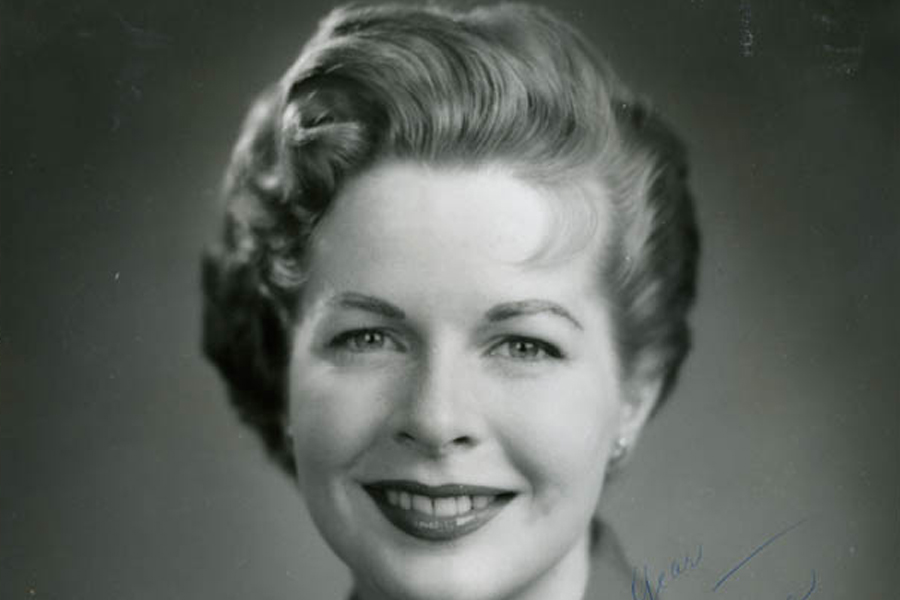
Lewis Tipton Stringer Huntley, widely known as Tippy Stringer and later as Tippy Stringer Huntley Conrad, was an American television pioneer, performer, businesswoman, political candidate, and philanthropist. Born on July 15, 1930, she lived a life that connected the early days of television broadcasting with the glamour of entertainment, the ambition of resort development, and the lasting influence of charitable giving.
Her story is particularly interesting because she moved through several worlds that rarely overlapped so naturally. She worked as a television weather reporter when women had limited opportunities in major-market news, became the wife of celebrated NBC journalist Chet Huntley, helped shape Montana’s Big Sky Resort, and later married actor William Conrad.
Although her marriages brought her into the public eye, her own accomplishments deserve equal attention. She possessed a lively personality, a strong sense of independence, and an entrepreneurial spirit that carried her from Washington, D.C., to Montana and eventually to Beverly Hills, California.
I find her life especially compelling because it reveals how a woman could build a professional identity in an emerging industry, step into demanding family responsibilities, and later establish a philanthropic legacy that continued beyond her lifetime.
Early Life and Family Background
On July 15, 1930, Lewis Tipton Stringer was born in Evanston, Cook County, Illinois. Arthur Campbell and Lewis Frances Sugg Stringer (Louie or Louise) were her parents. A family that emphasized education and professional success, both parents graduated from the University of Chicago.
Stringer was exposed to radio and television early on by her broadcasting executive father. She attended Bethesda-Chevy Chase High School in Washington, D.C., after the family moved there in the late 1930s.
Sarah Lewis Tipton, her maternal grandmother, gave her an uncommon name. Her unique name inspired one of her favorite childhood stories.
She was survived by her brother Arthur C. Stringer. She also had nieces and nephews Suellen Stringer-Hye, Elizabeth Doble Stringer, Arthur Campbell Stringer III, and Lewis Tipton Stringer.
Her work benefited from her family’s emphasis on education and communication. Her personality, not family connections, set her apart in the competitive television world.
College Years and the Origin of the Name Tippy
Stringer’s educational journey took an unexpected turn when she applied to the College of William & Mary. Her name led the institution to assume she was male, and she was reportedly assigned to a men’s dormitory.
When the mistake was discovered, the women’s dormitories had no available space. Rather than pursue the original arrangement, she attended the University of Maryland.
At Maryland, she majored in theater and demonstrated a natural ability to perform before an audience. She appeared in university productions and was crowned homecoming queen in 1951. During this period, she adopted the nickname Tippy, the name by which friends, colleagues, and the public would come to know her.
Her theatrical ability attracted the attention of agents interested in film and stage opportunities. However, she chose broadcasting, an industry that was beginning to transform American entertainment and journalism.
Her college years helped develop the confidence and presentation skills that would later make her a memorable television personality. The stage had taught her timing and expression. Broadcasting would give those talents a new audience.
Tippy Stringer’s Pioneering Television Career
Beginning at WRC TV in Washington
In the early 1950s, Tippy Stringer began working in radio and television at WRC-TV, the NBC affiliate in Washington, D.C. Her early assignments included cooking and homemaking programs, which reflected the limited range of roles commonly offered to women on television at the time.
In 1953, she became the station’s regular weather reporter. This position placed her among the early women to appear regularly on a major-market television news broadcast.
Her approach combined polished presentation, intelligence, and an engaging personality. She often appeared wearing pearls, presenting forecasts with a poised style that helped make weather reporting entertaining as well as informative.
She also created a cartoon character called Senator Fairweather, which became part of her television identity and attracted wider attention.
Balancing Weather Reports and Nightclub Performances
Stringer’s professional life extended beyond the television studio. She also performed as a singer in floor shows at the Blue Room of Washington’s Shoreham Hotel.
The hotel’s connection to the broadcasting station through an underground tunnel made it possible for her to move between her television duties and nightclub performances. On some evenings, she reportedly delivered two weather segments and performed in two nightclub shows.
This demanding schedule illustrates the energy required to establish a career in the early entertainment industry. She was not simply reading temperatures and predicting rain. She was building a public persona across television, music, and local promotions.
Her work included appearances at parades and promotional events, as well as product endorsements. Her popularity among both male and female viewers helped establish her reputation as an appealing and capable television personality.
In 1955, her distinctive presentation and Senator Fairweather character received national attention when she was featured in Life magazine.
Marriage to Chet Huntley and Life in the Public Eye
How Tippy Met Chet Huntley
Tippy Stringer met Chester Robert Huntley, better known as Chet Huntley, in 1957. David Brinkley reportedly helped introduce them, with the initial connection described as virtually taking place through satellite communication while Huntley was in New York and Brinkley was in Washington.
Huntley was already a respected journalist whose career had advanced from local radio broadcasting to national television. He was born on December 10, 1911, in Cardwell, Montana, and had built his reputation through years of reporting, writing, and commentary.
The couple courted for several months before marrying in March 1959.
Their relationship brought together two people who understood the demands of broadcasting. Stringer had established herself as a local television personality, while Huntley was becoming one of the most recognizable news anchors in America.
Chet Huntley’s Early Career and Professional Legacy
Before becoming a household name, Huntley spent years developing his craft in radio.
He began broadcasting in Seattle in 1934 while completing his education at the University of Washington, where he earned a degree in speech and drama. His early work included writing, announcing, selling advertising, and managing programming.
He subsequently worked in Spokane and Portland before moving to Los Angeles in 1937. From 1939 to 1951, he worked with CBS Radio, reporting on events across the western United States and covering the region during World War II.
Huntley received a Peabody Award in 1942 for reporting on prejudice against Mexican Americans in California. His willingness to address social issues became an important feature of his journalism.
After working with ABC, he joined NBC in 1955. In 1956, he was paired with David Brinkley to cover the presidential political conventions. Their successful partnership led to The Huntley-Brinkley Report, which began airing in October 1956 and became one of America’s most influential evening news programs.
For Tippy, marriage to Huntley meant entering a world shaped by public attention, demanding schedules, and the responsibilities associated with a prominent television journalist.
Family Life and Widowhood
Huntley had two daughters from his earlier marriage to Ingrid Rolin, which ended in divorce in 1959. Tippy became their stepmother after marrying him.
Tippy and Chet did not have children together. She also had no biological children with her second husband, William Conrad.
Huntley retired from NBC in 1970, and the couple turned their attention toward Montana. Their marriage ended with his death from lung cancer on March 20, 1974, shortly before the formal dedication of Big Sky Resort.
After his death, Stringer spoke publicly about the emotional and social difficulties of widowhood. Her appearance on The Phil Donahue Show helped bring attention to experiences that many widowed people found difficult to discuss openly.
Her willingness to speak about grief revealed a more personal side of a woman often remembered for her polished public image.
Big Sky Resort and Tippy Stringer’s Business Leadership
Stringer’s Montana Big Sky Resort development was a major life event.
They relocated to Montana after Huntley retired in 1970 and envisioned a huge ski resort near the Gallatin River outside Bozeman. The initiative showed Huntley’s love for his home state and the couple’s desire to build a business.
The Big Sky Resort opened in late 1973 or early 1974. Huntley died days before its dedication, leaving Stringer to cope emotionally and practically without her spouse.
She led the resort’s early development as board chair and CEO.
Even after being sold to a Michigan firm in 1976, the resort retained its Huntley identity. Huntley Lodge and Tippy’s Tumble ski run maintain such history.
Resort development required more than a good idea, therefore Stringer’s help was crucial. It required management, planning, financial decisions, and momentum during tough transitions.
Big Sky showed her she could work outside of television. She was a businesswoman who helped make Montana’s mountains a popular recreation spot.
Political Ambitions and Public Service
In 1978, Tippy Stringer ran unsuccessfully as a Republican candidate for Congress from Montana.
Her candidacy followed years of professional experience, public visibility, and involvement in a major development project. It also reflected a period when women were seeking greater representation in American political life.
Although she did not win the election, the campaign added another dimension to her public identity. She had already worked in broadcasting, supported a prominent journalist’s career, and helped manage a resort. Running for Congress demonstrated her willingness to enter another demanding arena.
Her political campaign also showed that her interests extended beyond private business and entertainment. She was prepared to participate directly in the public affairs of the state she had come to call home.
Marriage to William Conrad
Following Chet Huntley’s death, Stringer’s life eventually took another turn.
Around 1980, she met William Conrad, an accomplished actor and voice performer. Conrad had been widowed in 1977, and the two developed a relationship that led to marriage on May 1, 1980, in Los Angeles.
Conrad was born on September 27, 1920, and became famous for his deep voice and commanding screen presence. He was the original radio voice of Marshal Matt Dillon in Gunsmoke and later gained widespread recognition for starring in the television crime dramas Cannon and Jake and the Fatman.
Their marriage connected Stringer to another branch of American entertainment. While Huntley had represented the world of serious television journalism, Conrad was associated with radio drama, acting, and popular crime television.
After marrying Conrad, Stringer lived in Los Angeles and assisted with aspects of his later career, including work associated with Jake and the Fatman.
Their marriage lasted until Conrad’s death on February 11, 1994. As with her first marriage, Stringer experienced the loss of a husband whose career had reached millions of people.
The Stringer Foundation and Her Philanthropic Legacy
In 1995, Stringer founded the Stringer Foundation, establishing a charitable organization that reflected her broad range of interests.
The foundation supported causes involving public broadcasting, literacy, animal protection, women’s shelters, reproductive education, family planning, environmental conservation, performing arts, and medical research.
Brain tumor research became particularly meaningful in light of Stringer’s eventual illness. Organizations associated with brain tumor research and Alzheimer’s research have appeared among the beneficiaries of the foundation’s giving.
The foundation’s reported assets have reached approximately $22 million to $23 million in more recent reporting years, with annual grants often exceeding $1 million. These figures describe the foundation’s resources, not Stringer’s personal net worth.
Her individual wealth has not been established through a reliable, publicly detailed accounting. Her financial circumstances were connected to her professional career, business activities, entertainment industry relationships, and philanthropic resources.
What stands out is the breadth of the causes she supported. Her giving extended from the arts and public communication to animal welfare, education, and medical science.
The Stringer Foundation gave her interests an enduring structure. Instead of limiting her influence to the people who remembered her television appearances or her role at Big Sky, it provided a means of supporting organizations and communities over time.
Lewis Tipton Stringer Huntley’s Death
Tippy Stringer Huntley Conrad, 80, died at home in Beverly Hills on October 1, 2010. A brain tumor plagued her.
A life that spans numerous key American cultural periods ended with her death. She started broadcasting during television’s early beginnings, experienced network news’s fame in the 1950s and 1960s, helped build a big Montana resort, and eventually founded a foundation supporting many philanthropic organizations.
Friends recall her intelligence, energy, social charm, and long Montana and Los Angeles friendships.
Her legacy lives on in women in television, Big Sky Resort, her husbands’ careers, and her foundation’s humanitarian efforts.
Family Members and Their Relationships
The Stringer, Huntley, and Conrad families connected several branches of American broadcasting and entertainment.
| Family member | Relationship or significance |
|---|---|
| Arthur Campbell Stringer | Tippy’s father and a broadcasting industry executive |
| Lewis Frances Sugg Stringer | Tippy’s mother, also known as Louie or Louise |
| Arthur C. Stringer | Tippy’s brother |
| Chet Huntley | Tippy’s first husband and prominent NBC news anchor |
| Ingrid Rolin | Chet Huntley’s first wife and the mother of his two daughters |
| Chet Huntley’s two daughters | Tippy’s stepdaughters |
| William Conrad | Tippy’s second husband, actor, and radio voice performer |
| Suellen Stringer-Hye | Niece listed among Tippy’s surviving relatives |
| Elizabeth Doble Stringer | Niece listed among Tippy’s surviving relatives |
| Arthur Campbell Stringer III | Nephew listed among Tippy’s surviving relatives |
| Lewis Tipton Stringer | Relative listed among Tippy’s surviving family members |
Tippy had no biological children of her own. Her family life included her brother, extended relatives, stepdaughters through her marriage to Huntley, and the professional and personal networks she developed over many decades.
Frequently Asked Questions
Who was Lewis Tipton Stringer Huntley?
Lewis Tipton Stringer Huntley, commonly known as Tippy Stringer, was an American television weather reporter, performer, businesswoman, political candidate, and philanthropist. She was also known for her marriages to NBC journalist Chet Huntley and actor William Conrad.
When and where was Tippy Stringer born?
She was born on July 15, 1930, in Evanston, Cook County, Illinois. She later grew up in the Washington, D.C., area and attended Bethesda-Chevy Chase High School.
Why was Tippy Stringer famous?
She became known as one of the early women to deliver regular weather reports on a major-market television station. She also performed as a singer, helped develop Big Sky Resort in Montana, ran for Congress in 1978, and founded the Stringer Foundation in 1995.
Did Tippy Stringer and Chet Huntley have children?
No. Tippy and Chet Huntley did not have children together. Huntley had two daughters from his previous marriage to Ingrid Rolin, and Tippy became their stepmother.
Who was Tippy Stringer’s second husband?
Her second husband was William Conrad, an actor and voice performer best known for Gunsmoke, Cannon, and Jake and the Fatman. They married on May 1, 1980, in Los Angeles and remained married until his death in 1994.
What was Tippy Stringer’s role in Big Sky Resort?
She helped develop the resort with Chet Huntley and remained involved in its early years after his death in 1974. She held leadership responsibilities during the period when the resort was establishing itself as a major Montana destination.
Did Tippy Stringer run for political office?
Yes. In 1978, she ran as a Republican candidate for the United States House of Representatives from Montana. She did not win the election.
What was the Stringer Foundation?
Founded by Tippy Stringer in 1995, the Stringer Foundation is a charitable organization that has supported education, literacy, public broadcasting, animal protection, women’s shelters, environmental conservation, the performing arts, and medical research.
When did Tippy Stringer die?
She died on October 1, 2010, at the age of 80, at her home in Beverly Hills, California, following a battle with a brain tumor.
What is Tippy Stringer’s lasting legacy?
Her legacy encompasses early women in television broadcasting, the development of Big Sky Resort, her connections to influential figures in American journalism and entertainment, and the philanthropic work carried forward through the Stringer Foundation. Her life also remains an example of the many professional identities a woman could build during a period when opportunities for women in broadcasting and business were still evolving.